
Table of Contents
- What Comfort Sleep Systems Actually Include
- Mattress Comfort and Support: The Two Specs That Decide Everything
- Comparing Mattress Types Side by Side
- What Comfort Sleep Systems Reviews Reveal (and What They Hide)
- Restopedic Mattress Claims Under the Microscope
- Mattress Brands in the USA: How to Read the Field
- Warranty, Trial Periods and Delivery: The Fine Print That Costs You
- Pillows and Sleep Accessories That Complete the System
- Frequently Asked Questions
Last Updated: October 17, 2026
What Comfort Sleep Systems Actually Include
A comfort sleep system is the complete set of layers and accessories that determine how well you sleep: the mattress, foundation, pillow, and any topper or protector.
This guide covers how to evaluate the whole system, not just the box you carry home.
The mattress is the foundation. Everything stacked on top either supports its strengths or fights them: a firm mattress with a soft pillow and a sagging topper feels worse than a mid-range mattress set up correctly.
Here is what a full system usually contains:
- Mattress - the main support and comfort layer
- Foundation or base - slats, box spring, or platform
- Pillow - matched to your sleep position
Mattress Comfort and Support: The Two Specs That Decide Everything
Comfort and support are not the same thing, and confusing them is the most common buying mistake. Comfort is surface feel; support is how the core keeps your spine aligned.
A mattress can feel plush and support you badly, or support well and feel like a board. You need both, and the balance depends on your body.
Matching firmness to sleep position and body type
Side sleepers generally need a softer surface at the shoulder and hip so those joints can sink in. Back sleepers usually do best with medium firmness that keeps the lower back from arching.
Body weight matters too. Heavier sleepers sink further into any given surface, so a mattress that feels medium to a lighter person can feel soft to someone heavier.
Comparing Mattress Types Side by Side
Each mattress type trades off feel, durability, and price differently. There is no universally best option, only the one that fits how you sleep and what you can spend.
| Type | Feel | Support Style | Durability Pattern | Heat | Motion Transfer | Best Suited To |
|---|---|---|---|---|---|---|
| Latex | Bouncy, responsive | Even, firm-ish | Long-lived; resists sagging | Sleeps cooler than foam | Low to moderate | Sleepers who want pushback and a cooler surface |
| Foam (memory) | Conforming, quiet | Contours to the body | Dense foam lasts; cheap foam softens early | Can sleep warm | Very low | Couples and pressure-point sufferers |
| Innerspring | Traditional, springy | Coil-based pushback | Coil quality decides lifespan | Breathes well | Higher | Sleepers who want a familiar, airy feel |
| Hybrid | Mixed | Coils plus foam or latex | Depends on both coil and foam quality | Moderate | Low to moderate | Shoppers who want contouring with pushback |
| Futon | Firm, flat | Minimal contouring | Short comfort life | Breathes well | High | Guest rooms and short-term use |
Latex, foam and innerspring: construction and trade-offs
Latex comes from rubber tree sap, natural or blended, and returns to shape quickly. Because it rebounds rather than compresses, it holds its surface over years rather than softening in the middle, and it sleeps cooler than memory foam for many people because air moves through the pincore or open-cell structure.

Foam mattresses, especially memory foam, mold to your body and absorb motion, which suits couples who wake each other up.
Innerspring designs use steel coils under a thin comfort layer. They feel familiar and breathe well, but cheap coils sag and transfer motion.
Futons are the simplest construction: a firm, flat sleeping surface with little contouring. They work for guest rooms and short-term use, not for pressure relief.
Matching mattress type to sleep position and body type
The type you choose should follow how you sleep and how much you weigh:
- Side sleepers need surface give at the shoulder and hip. Memory foam and soft latex contour best; a firm innerspring can create pressure points.
- Back sleepers usually do best with medium firmness that keeps the lower back from arching. A hybrid or medium latex gives support without a hard surface.
- Stomach sleepers tend to need firmer support to stop the hips from dropping. A firm innerspring or firm latex holds the hips up better than soft memory foam.
What to ask before you compare prices
Because prices are not consistently visible across listings, compare models on four construction details before you look at cost: foam density, coil gauge and count, layer thickness, and written warranty terms. Two mattresses at the same price can differ sharply on all four, and those details predict year-four feel better than the showroom does.
What Comfort Sleep Systems Reviews Reveal (and What They Hide)
Reviews tell you how a mattress felt in the first month, rarely how it feels in year four, the biggest weakness in online mattress research.
When you read comfort sleep systems reviews, sort by time owned, not star rating. A five-star review written after two nights carries little weight; a three-star review written after eighteen months describing a visible sag tells you far more.
Watch for these patterns:
- Reviews that mention body weight and sleep position are more useful than generic praise
- Complaints about smell, heat, or edge collapse tend to repeat across many reviewers
- Incentivized reviews often appear in bursts around launch dates
Restopedic Mattress Claims Under the Microscope
Claims about any specific mattress brand deserve the same scrutiny, and Look for what the claim actually promises versus what it implies.
Ask three questions of any brand claim:
- Is it measurable? "Pressure-relieving" is not. "Certified to a named foam standard" is.
- Who verified it? A brand testing its own product is not independent verification.
- What is excluded? Warranties and guarantees often carry conditions buried in the fine print.
US Consumer Product Safety Commission guidance on mattress flammability sets the federal standard every mattress sold in the USA must meet, so "meets federal standards" is a baseline, not a selling point.
The same skepticism applies to custom mattress manufacturing: custom sizes solve a fit problem.
Mattress Brands in the USA: How to Read the Field
Factory-direct and local manufacturing have real advantages: you can often try the mattress in a showroom, ask about construction directly, avoid retail-middleman markup, and get simpler warranty claims.
The trade-off is reach: a small local manufacturer may not deliver far, and model names change often, making long-term reviews hard to find.
Federal Trade Commission guidance on mattress labels and law tags explains what the law tag must disclose, including materials and origin.
Warranty, Trial Periods and Delivery: The Fine Print That Costs You
Warranty and trial terms decide what happens when the mattress fails or you simply hate it. Most shoppers compare on price and feel, then discover the return policy after purchase. Treat the fine print as a comparable spec, like foam density or coil gauge.
Warranty terms to compare side by side
- Length of coverage and whether it is prorated. A 10-year non-prorated warranty covers full replacement for the term; a prorated warranty reduces the payout each year, so the same defect costs you more in year eight than in year one.
- What counts as a defect. Sagging depth thresholds are common. A warranty that only covers sag beyond a set depth may exclude the body impressions you actually notice.
- Who pays shipping and inspection. Some warranties require you to ship the mattress back at your cost or pay for an independent inspection before a claim is approved.
Trial period terms to compare side by side
- Minimum break-in period. Many trials require you to sleep on the mattress for a set number of nights before you can return it, because foam and coil layers need time to settle.
- Restocking and return shipping fees. These are the costs most often left out of the headline trial length. A long trial with a high return fee is worth less than a shorter trial with free returns.
- Whether the trial applies to all sizes. Some programs exclude certain sizes or floor models.
Delivery terms to compare side by side
- Old mattress removal. Ask whether removal is included or an add-on, and whether it applies to your area.
- Stairs, apartment, and remote-area surcharges. These can change the delivered cost meaningfully and are rarely shown in the listed price.
- Who carries it inside. Curbside, threshold, and room-of-choice delivery are different service levels.
How to compare policies without a comparison table
Because published policies vary by brand and region, ask the same five questions of every seller before you pay: What is the non-prorated warranty length? What sag depth counts as a defect? Who pays return shipping? Is there a restocking fee? Is old mattress removal included? Write the answers next to each model. The seller who answers all five clearly is usually the one whose fine print you can trust.
Pillows and Sleep Accessories That Complete the System
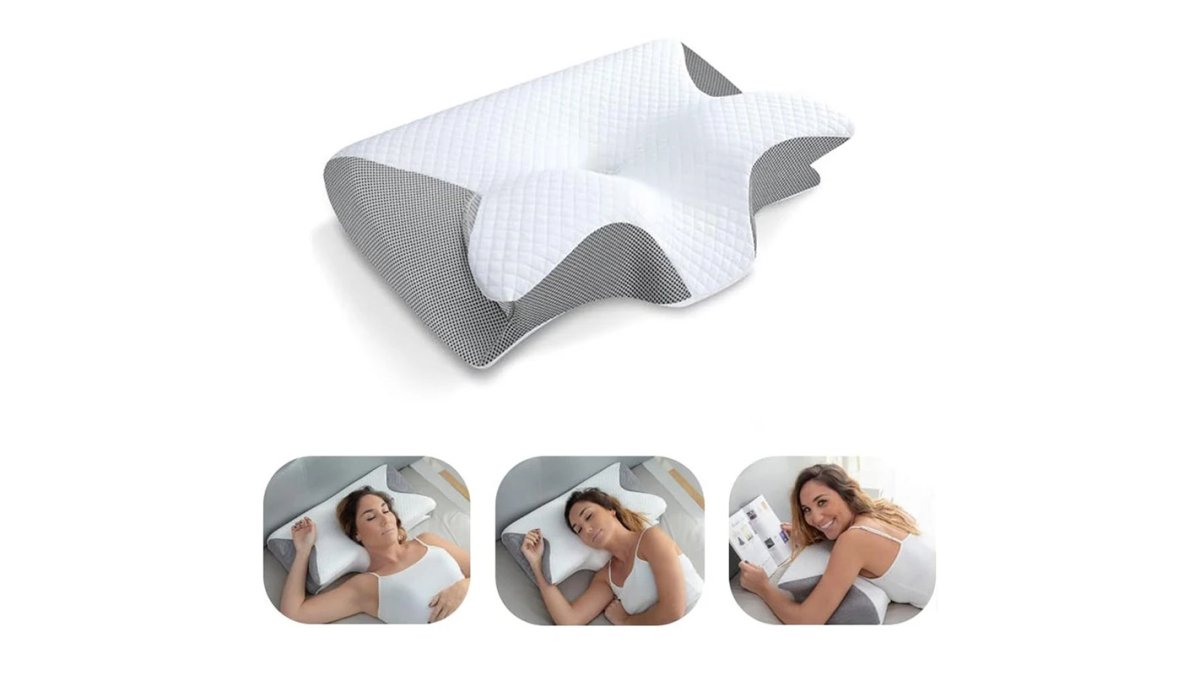
For side sleepers, a thicker pillow fills the gap between shoulder and head. Back sleepers need a lower profile. Stomach sleepers do best with a thin pillow or none at all.

If you travel or camp, a contoured option helps. Our Neck Pillow uses a 2-in-1 ergonomic contour design in memory foam to support the natural curve of the neck, practical for tents, cars, and guest beds alike. For lounging rather than sleeping, the Green Wearable Turtle Shell Pillows are a lighter, more playful option for kids and adults around camp.
Beyond the pillow, add a washable protector and check that your base matches the mattress. A mattress on the wrong foundation can void the warranty.
Frequently Asked Questions
What should you look for when comparing comfort sleep systems?
Start with three specs: support level for your sleep position, material construction, and the return policy. Side sleepers usually need softer shoulder and hip pressure relief, while back and stomach sleepers need firmer lumbar support. Then check the construction, whether latex, foam or innerspring, because it determines durability and heat retention. Finally, read the warranty length and trial window before you buy. A mattress that fits your body but comes with a 30-day trial and no return shipping coverage is a bigger risk than the spec sheet suggests.
How do you choose a mattress that suits your sleep position?
Match firmness to how you actually sleep, not how you think you sleep. Side sleepers do best with a softer surface that lets the shoulder and hip sink in enough to keep the spine level. Back sleepers need medium firmness with solid lumbar support. Stomach sleepers need the firmest surface of the three so the hips do not drop and arch the lower back. If you switch positions through the night, a medium-firm model is the safest compromise. Test in a showroom for at least 15 minutes in your dominant position.
Are custom mattresses available for boats and other odd spaces?
Yes. Custom mattress manufacturing exists specifically for boat berths, campervans, RVs and other non-standard shapes where a rectangular mattress will not fit. You supply the measurements, including any taper or cutout, and the manufacturer cuts foam or latex to match. Expect a longer lead time and a higher price than a standard size, and confirm the return policy before ordering, because custom-cut mattresses are often non-returnable. Measure at the widest and narrowest points of the berth and account for any trim or hatch.
What do comfort sleep systems reviews actually tell you?
Reviews are most useful for spotting patterns, not individual star ratings. Read the three-star reviews first, because they usually describe a real trade-off rather than a shipping complaint. Look for repeated mentions of the same issue, such as sagging after a year, heat buildup, or a warranty claim that was denied. Ignore reviews written within a week of delivery, since they describe the unboxing, not the mattress. A model with 200 reviews and a consistent complaint about edge support tells you more than a model with 12 five-star reviews.
Getting a full night's sleep outdoors comes down to the same basics as at home: the right support, a pillow that fits your position, and gear that does not fail on the second trip. At ShopOutdoorsy, we stock reliable outdoor essentials and comfort-focused accessories so you can build a sleep setup that travels with you, from dependable favourites for weekends away to versatile gear for wild places. Browse our sleep accessories and add the pieces your setup is missing.