
Table of Contents
- Why Durable Outdoor Gear Matters for Seniors
- Footwear and Traction Aids for Safe Trail Conditions
- Best Hiking Poles for Seniors: Stability and Joint Support
- Layering Systems and Weatherproof Clothing
- How to Choose Gear for Aging Backpackers
- Post-Hike Recovery and Joint Care Essentials
- Comparison Table: Durable Gear Options for Outdoor Adventures
- Frequently Asked Questions
Last Updated: October 9, 2026
Why Durable Outdoor Gear Matters for Seniors
Outdoor adventures shouldn't end after 50. The right equipment transforms hiking from a risky proposition into an enjoyable weekend escape. The challenge isn't age, it's that most gear recommendations ignore what actually changes with time: joint impact, stability needs, and recovery.
At ShopOutdoorsy, we offer gear that supports your body while keeping you safe on the trail.
Most outdoor guides treat seniors as an afterthought, suggesting lighter packs or shorter distances. A good trekking pole reduces knee impact by up to 25% on descents, aggressive tread prevents the slips that cause serious injuries, and a posture corrector worn under your base layer keeps your spine aligned on uneven terrain.

Below, we'll show you what durable outdoor gear for seniors looks like, from footwear to recovery tools most hikers overlook.
Footwear and Traction Aids for Safe Trail Conditions
The foundation of any safe hike starts with your feet.
Look for boots with aggressive tread and deep lugs (at least 4-5mm), waterproof membranes, and ankle support that prevents rolling on uneven ground.
The Upgraded Adjustable Bunion Corrector from ShopOutdoorsy addresses a real problem many seniors face: foot pain compounds over hours of hiking, and bunions or toe misalignment can turn a pleasant day into an ordeal.

Consider gaiters too, lightweight, inexpensive fabric sleeves that keep debris and moisture out of your boots and prevent the small irritations that accumulate on full-day hikes.
Best Hiking Poles for Seniors: Stability and Joint Support
Trekking poles are the single most important piece of durable outdoor gear for seniors.
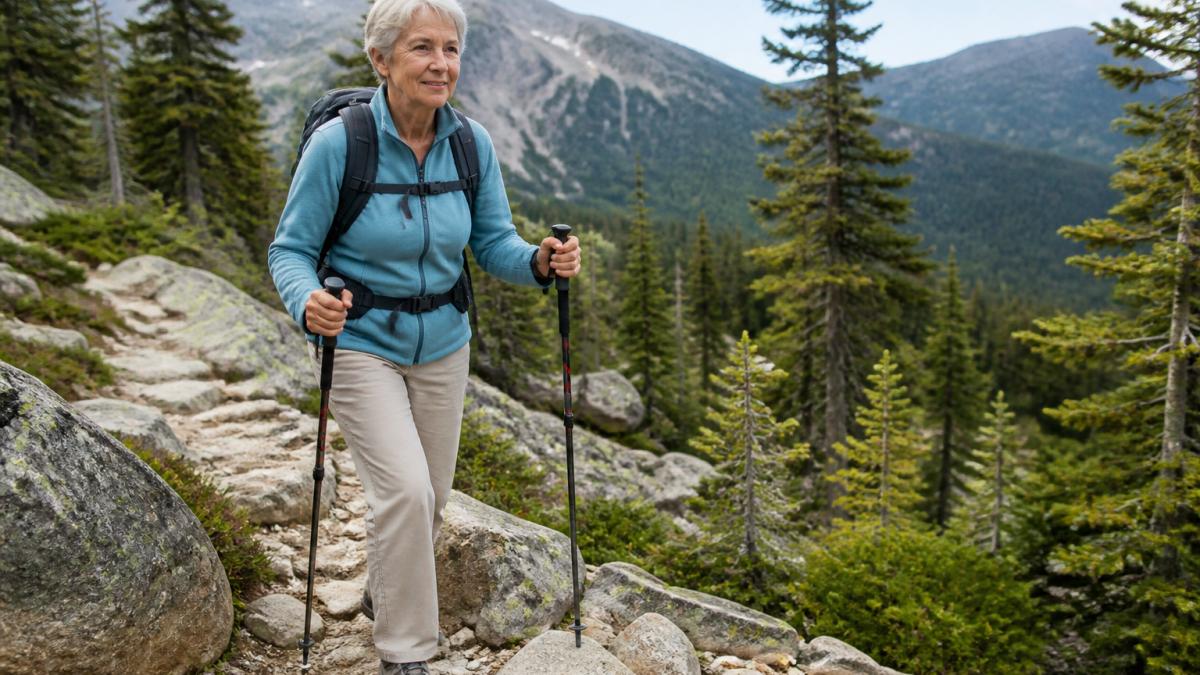
The right poles distribute your weight across four limbs instead of two, improve stability on loose ground, and reduce joint stress on descents.
Length matters: stand in flat shoes and hold a pole upright, your arm should bend at roughly 90 degrees at the elbow.
Wrist straps matter too.
Layering Systems and Weatherproof Clothing
Temperature swings on the trail are unpredictable, cool in the morning, warm during exertion, cool again at rest.
The foundation is a moisture-wicking base layer, merino wool or synthetics that pull sweat from your skin.
The Loose High Collar Fleece Lined Hoodie from ShopOutdoorsy works as base layer or mid-layer depending on conditions.
Wool and synthetics maintain insulation even when damp, on a cool, wet day, that's the difference between comfortable and hypothermic.
How to Choose Gear for Aging Backpackers
Most gear guides tell seniors to buy "lightweight" and "adjustable" gear and call it a day. That skips the two things that actually determine whether equipment works for an aging body: how it interacts with your joints under load, and how easy it is to operate with hands that may have lost grip strength or fine motor control. This section covers both, plus the fit and load mechanics that matter more after 60.
Start with dexterity, not weight
A 2-pound backpack you can't buckle is worse than a 3-pound backpack you can. Before looking at specs, test the closures: can you open the hip belt buckle with one hand?
A common pattern among senior hikers is replacing small cord-lock toggles with aftermarket zipper pulls, or adding a paracord loop to buckles so they release with a thumb rather than a pinch. These cheap modifications turn gear from frustrating into functional.
Match the pack to your spine, not just your torso length
Torso length is the standard fit measurement, and it still matters. But for seniors, two additional fit points deserve equal attention. First, the hip belt should sit on the iliac crest (the top of your hip bones), too high transfers load to your shoulders, too low chafes and loses its load-transfer benefit.
Look for packs with an adjustable torso range rather than a fixed size, since torso length can change with posture and age-related spinal changes.
Prioritize joint-specific support over generic "cushioning"
"Cushioning" is a marketing word. What actually protects aging joints is load transfer and impact reduction. In footwear, that means a midsole with enough stack height (most trail shoes run 25-35mm) plus a rock plate or shank that keeps sharp rocks from pressing into your foot.
If you have knee osteoarthritis, the highest-value decision is trekking poles used correctly on descents. For lower back pain, it's a pack with a rigid frame and well-molded hip belt.
Accessibility features worth paying for
Some features cost more but pay for themselves in daily usability. Magnetic buckle closures operate one-handed with no pinch grip. Side-entry or clamshell pack openings let you reach gear without lifting the pack overhead. Two-way jacket zippers vent from the bottom without unzipping the whole front. Boots with a heel pull loop and wide throat opening are far easier to put on, especially with limited hip flexion or balance concerns.
Weight distribution: the 10% rule still applies
A loaded pack should weigh no more than about 10% of your body weight for day hiking, and no more than 20% for fit, experienced backpackers. For a 150-pound hiker, that's a 15-pound day pack and a 30-pound overnight pack at the upper end. These numbers reflect the load your hips and knees can absorb repeatedly without cumulative strain. If you're consistently carrying more, reduce water weight (filter on trail), reduce food weight (calorie-dense foods), or split group gear among more people.
A simple decision sequence
- Identify your primary joint concern (knees, back, feet, hands).
- Choose the one piece of gear that most directly addresses it (poles for knees, framed pack with hip belt for back, supportive footwear for feet, accessible closures for hands).
- Test it on a short, low-stakes hike before buying anything else.
- Add secondary gear only after the primary piece proves itself.
This prevents the common mistake of buying a full kit at once and discovering on the trail that the pack doesn't fit your spine or the boots blister your heels at mile three.
Post-Hike Recovery and Joint Care Essentials
Most outdoor gear guides end when you take off your boots. That's a mistake, especially for seniors, recovery is where the next hike is won or lost. The hours after a hike determine whether you wake up stiff for three days or feel ready to go again next weekend. This section covers the recovery categories most guides ignore, compression, percussion and massage tools, recovery footwear, and mobility aids, plus the timing that makes them work.
The first 60 minutes: compression and elevation
Inflammation peaks in the first few hours after strenuous activity. For knees and ankles that absorbed thousands of downhill impacts, a compression sleeve worn 2-3 hours after the hike can reduce swelling and improve circulation.
Elevation matters as much as compression: lying down with legs raised above heart level for 15-20 minutes helps venous return. If you have a history of blood clots or circulation issues, check with your doctor before using compression garments, the wrong pressure can do more harm than good.
Percussion and massage tools: what actually helps
Percussion massagers deliver rapid, repetitive pulses and do the work your hands may no longer be able to do.
A smart knee massager, like the Physiotherapy Relief Smart Knee Massager from ShopOutdoorsy, combines heat, vibration, or compression in a wearable form that wraps the joint, targeting the joint itself rather than surrounding muscle.

For hands and forearms, which take a beating from pole grips and pack straps, a massage ball or hand exercise balls restore grip and reduce stiffness.
Recovery footwear: the shoes you wear after the boots come off
The footwear you wear after a hike matters more than most people realize. A firm, supportive sandal or slip-on with a contoured footbed, a recovery slide or cork-footbed sandal, supports the arch and heel while letting your feet spread and cool down.
If you have diabetes or neuropathy, inspect your feet after every hike. Small blisters, hot spots, or cuts can escalate quickly when sensation is reduced.
Mobility aids and stretching tools
A foam roller or stretching straps help maintain range of motion in your hips, hamstrings, and calves, the areas that tighten most after hiking. For seniors with balance concerns, a stretching strap lets you stretch hamstrings while lying on your back, avoiding standing bends.
If you use a hiking stick or cane on the trail, consider a folding version that fits in your pack and deploys for the walk from trailhead to car, the transition where many post-hike falls happen, because your legs are tired and your attention has dropped.
Sleep: the recovery tool you already own
Sleep is when tissue repair happens. Two things matter for senior hikers: position and surface. Side sleepers should put a pillow between their knees to keep hips and spine aligned; back sleepers need a pillow that supports the neck's natural curve without pushing the chin forward. When camping, a sleeping pad with 3-4 inches of thickness and an appropriate R-value prevents hips and shoulders from bottoming out and creating pressure points that wake you up.
A simple post-hike routine
- Within 60 minutes: compression sleeve on any swollen joint, legs elevated 15-20 minutes.
- Within 2-3 hours: percussion or massage tool on large muscle groups, 1-2 minutes per area.
- Evening: smart knee massager or targeted joint device 10-15 minutes; gentle stretching with a strap or chair-based routine.
- Before bed: recovery footwear on, hydration up, sleep surface checked.
- Next morning: reassess. If a joint is still swollen or painful, rest it, recovery gear supports healing, it doesn't replace it.
Comparison Table: Durable Gear Options for Outdoor Adventures
| Gear Category | Product | Price | Best For | Key Benefit |
|---|---|---|---|---|
| Joint Support | Physiotherapy Relief Smart Knee Massager | $0.93 | Post-hike recovery | Reduces inflammation and promotes circulation |
| Posture & Alignment | Posture Corrector | $9.93 | Daily wear and recovery | Prevents back pain and maintains spinal alignment |
| Foot Health | Upgraded Adjustable Bunion Corrector | $20.04 | All-day trail comfort | Lightweight alignment with no weight penalty |
| Layering System | Loose High Collar Fleece Lined Hoodie | $12.93 | Temperature regulation | Breathable insulation with neck protection |
| Camp Lighting | 7-Color Rechargeable Camping Lantern | $19.83 | Evening camp setup | Waterproof portability with magnetic base |
| Supplementary Activity | Portable Fishing Rod | $13.65 | Relaxation between hikes | Compact design fits in any pack |
Durable outdoor gear for seniors isn't a compromise between safety and enjoyment, it's the foundation of both. The right footwear prevents falls. Trekking poles reduce joint impact. Layering systems keep you comfortable across changing conditions.
At ShopOutdoorsy, we've built a collection for adventurers who want reliability without fuss.
Start with proper footwear and trekking poles. Add a layering system that adapts to conditions. Finish with recovery tools that keep you trail-ready week after week.
Frequently Asked Questions
What camping gear is best for elderly people?
The best camping gear for seniors prioritizes comfort, stability, and ease of use. Focus on lightweight backpacks with ergonomic load distribution, supportive sleeping pads for joint comfort, trekking poles for stability on uneven terrain, and moisture-wicking layering systems for temperature regulation. Look for products with adjustable features and durable construction to handle repeated use on trail conditions without excessive weight.
What features should seniors look for in durable outdoor gear?
Prioritize ergonomic design that reduces strain on joints, impact absorption in footwear and sleeping systems, lightweight materials to minimize fatigue, adjustable components for a custom fit, weatherproofing for protection in changing conditions, and high-quality construction materials. Accessibility features like easy-to-grip handles, simple fastening systems, and intuitive navigation tools also matter. Test gear for dexterity requirements before committing to longer trips.
How do hiking poles help seniors on the trail?
Trekking poles provide crucial joint support by distributing impact across your upper body, reducing stress on knees and hips during descent. They improve stability on uneven terrain, enhance balance during stream crossings, and help with endurance by engaging your core and arms. Quality poles with ergonomic grips reduce hand fatigue, while adjustable lengths adapt to different trail conditions and your personal comfort needs.
Why is post-hike recovery gear important for older outdoor enthusiasts?
Post-hike recovery gear addresses the delayed muscle soreness and joint stiffness seniors commonly experience after outdoor activities. Recovery tools like knee massagers promote circulation, reduce inflammation, and accelerate healing. Compression garments support muscle recovery and improve mobility. Proper recovery gear extends your hiking season by reducing downtime and helps prevent injury cycles that can sideline you from future adventures.