
Table of Contents
- Why Lightweight Gear Matters for Weekend Trips
- The Big Three: Backpack, Shelter, and Sleep System
- Building an Ultralight Camping Gear List
- How to Pack Light for Camping Without Sacrificing Comfort
- Essential Gear for a 3-Day Camping Trip: What You Really Need
- Multi-Purpose Gear and Weight-to-Cost Optimization
- Conclusion: Your Lightweight Weekend Adventure Starts Here
- Frequently Asked Questions
Last Updated: September 25, 2026
Why Lightweight Gear Matters for Weekend Trips
Lightweight gear for weekend trips means freedom: you move faster, tire less, and enjoy the journey. The difference between a 40-pound pack and a 20-pound pack is the difference between dreading your hike and looking forward to it.
Most people overpack out of fear, bringing backup clothes and "just in case" items they never use. A well-chosen ultralight setup covers everything you actually need, and nothing more. A well-chosen ultralight setup covers everything you actually need, and nothing more.
A lighter pack reduces strain on your knees, ankles, and lower back, lets you hike longer with less fatigue, and improves sleep quality. Quality ultralight gear, while pricier upfront, lasts longer and performs better than heavy alternatives, ultimately saving money. This is the real advantage of lightweight gear for weekend trips: it transforms how you experience the outdoors.
The Big Three: Backpack, Shelter, and Sleep System
Your backpack, tent, and sleeping pad are the foundation of every trip. These three items account for most of your pack weight, so optimizing them first delivers the biggest impact.
Backpack Selection
A proper ultralight backpack should weigh 1-2 pounds and hold 30-40 liters. Look for minimal padding, simplified designs, and high-denier nylon or Dyneema fabrics that resist tears. Internal frame designs work better than external frames for weight distribution on shorter trips.
A good suspension transfers weight to your hips rather than your shoulders, reducing fatigue significantly. Test the pack with actual weight before committing; most weekend adventurers find a 35-liter pack covers everything they need.
Shelter Systems
Your tent is your second-biggest weight investment. Ultralight tents weigh 2-4 pounds; single-wall designs are lighter but require better ventilation, while double-wall designs provide better condensation control and weather protection.
Three-season tents work for most weekend trips and weigh less than four-season models. Freestanding designs offer flexibility, while trekking pole tents save weight at the cost of setup complexity.
Sleep System
Sleeping pads provide insulation and cushioning. Ultralight options include inflatable pads (1-2 pounds) that compress smaller but require repair kits, or closed-cell foam pads (0.5-1 pound) that need no maintenance.
A 20-degree synthetic bag weighs 2-3 pounds and handles most spring and fall conditions.
Building an Ultralight Camping Gear List
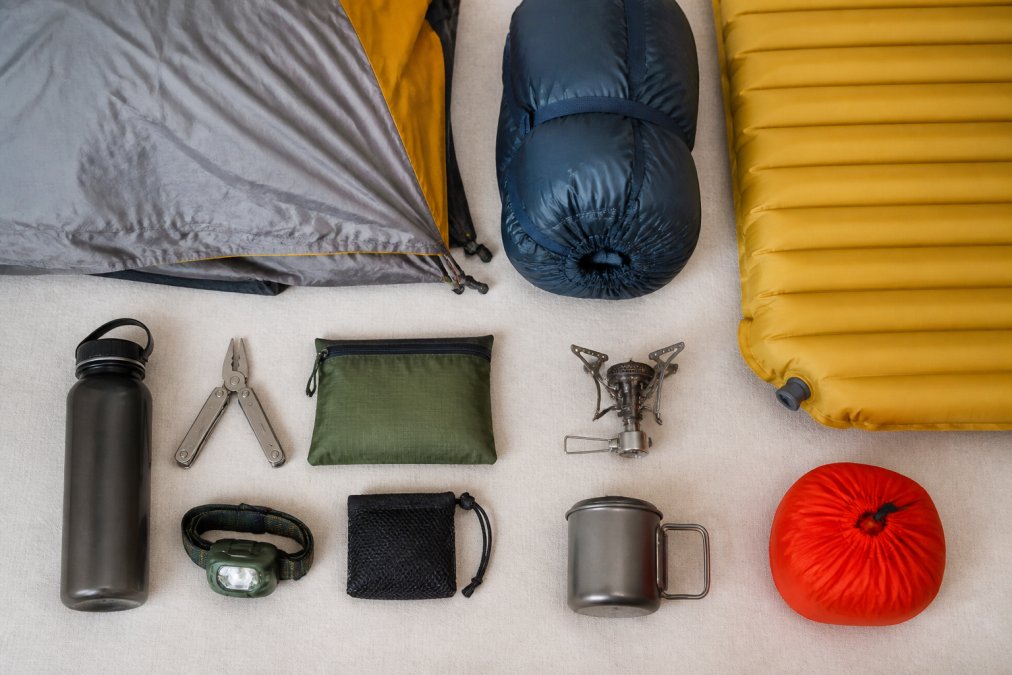
An ultralight camping gear list starts with the Big Three, then adds carefully selected multi-purpose items. The goal is a base weight under 15 pounds for weekend trips.
Clothing and Apparel Essentials
Layer with a moisture-wicking base layer in merino wool or synthetic (avoid cotton), a lightweight insulating layer, and an outer shell jacket for wind and rain.
Wear lightweight quick-dry hiking pants, bring one extra pair of socks and underwear, and pack a lightweight hat and gloves. Merino wool socks regulate temperature, resist odor, and dry quickly.
Choose hiking boots or trail runners based on terrain. Trail runners weigh less but offer less ankle support; boots provide stability. Break in new footwear before your trip.
Toiletries and Personal Hygiene
Keep toiletries minimal: biodegradable soap, toothbrush, toothpaste, sunscreen, and lip balm. A lightweight bandana serves multiple purposes, drying dishes, wiping sweat, securing gear.
Bring a small first aid kit with blister treatment, pain relief, and personal medications. A lightweight rechargeable headlamp like the 7-Color Rechargeable Camping Lantern provides campsite light.

Electronics and Power Management
A phone handles navigation and emergency communication. A lightweight power bank extends battery life; solar chargers add minimal weight for multi-day trips.
A portable charger like the 3 IN 1 FOLDABLE WIRELESS CHARGER charges multiple devices simultaneously and fits easily in a pack.

How to Pack Light for Camping Without Sacrificing Comfort
Packing light means making deliberate trade-offs based on your specific trip. The difference between a 25-pound and 35-pound pack comes down to swapping items based on conditions, not carrying a static kit for every scenario.
The Modular Approach: Swap Lists for Different Conditions
Build a modular system with core items and condition-specific swaps to pack light without guessing whether you'll be cold, wet, or uncomfortable.
Core items (always pack):
- Backpack, tent, sleeping pad, sleeping bag base layer
- One pair hiking pants, one pair socks, underwear, base layer shirt
- Toiletries, first aid, headlamp, phone, power bank
- Cooking system, water filter, food
Warm-weather swap (spring/summer, temps 50°F+):
- Remove: insulating layer, warm hat, gloves
- Add: lightweight shorts, extra socks (for wet conditions), sun hat
- Sleeping bag: 40°F rating instead of 20°F (saves 8-12 oz)
- Result: 2-3 lbs lighter than cold-weather setup
Cold-weather swap (fall/winter, temps below 40°F):
- Remove: shorts, lightweight layers
- Add: insulating fleece, warm hat, gloves, thermal base layer
- Sleeping bag: 20°F or lower rating (adds 8-12 oz)
- Sleeping pad: add closed-cell foam pad under inflatable for extra insulation (adds 4-6 oz)
- Result: 1-2 lbs heavier, but genuinely warm
Wet-weather swap (rain expected):
- Remove: extra socks (pack only one pair)
- Add: rain jacket, rain pants, waterproof pack cover or dry bags
- Sleeping bag: synthetic instead of down (maintains insulation when wet, adds 4-6 oz)
- Result: slightly heavier but functional in rain
This modular mindset prevents overpacking for warm trips and underpacking for cold ones. You're not carrying a "one-size-fits-all" kit; you're building trip-specific loads.
Weight-to-Cost Optimization for Budget-Conscious Packers
Ultralight gear is expensive: quality tents cost $400-600 and premium bags cost $300-500. Prioritize weight reduction in the Big Three first, then use budget-friendly alternatives for everything else.
Where to spend money (Big Three):
- Backpack: $150-250 for a reliable 35-liter ultralight pack; cheap packs cause shoulder and hip pain.
- Tent: $300-400 for a 3-season ultralight shelter. Quality ultralight tents (2-3 lbs) cost more than discount tents (6-8 lbs, $80-120), but weight savings justify the cost.
- Sleeping bag: $200-300 for a synthetic 20°F bag. Quality ultralight bags (2-2.5 lbs) outweigh budget bags (4-5 lbs, $60-100).
Where to save money (everything else):
- Clothing: Buy basic merino wool or synthetic pieces from mainstream outdoor brands (REI, Decathlon) rather than premium ultralight brands. A $40 merino base layer performs identically to a $80 version.
- Cooking system: A $15-25 lightweight stove and a $10 titanium pot work as well as $100+ premium systems. Function is the same; branding is the difference.
- Water filter: A $20-30 squeeze filter (like Sawyer) works as well as $80+ pump filters. Squeeze filters are lighter anyway.
- First aid and tools: Build your own kit from drugstore items ($15-20) rather than buying a pre-assembled outdoor kit ($50-80).
- Headlamp: A $15-20 basic LED headlamp performs identically to a $60 premium version.
This strategy, spend on weight-critical items, save on everything else, lets you build a functional ultralight kit.
Packing Execution: The Three-Pass Method
Pass 1 (Categorize): Lay out all gear by category: shelter, sleep system, clothing, cooking, toiletries, electronics, safety. This reveals duplicates and unnecessary items immediately.
Pass 2 (Weigh and justify): Weigh each item. If something weighs over 8 ounces and serves only one purpose, replace it or remove it. If it weighs under 4 ounces, keep it unless it's truly redundant.
Test Before Committing
Essential Gear for a 3-Day Camping Trip: What You Really Need
A three-day camping trip requires different planning than an overnight excursion. You need more food and potentially more clothing options, but your core gear stays the same.
| Item Category | Weight Range | Purpose |
|---|---|---|
| Backpack | 1-2 lbs | Carries everything |
| Tent/Shelter | 2-4 lbs | Weather protection |
| Sleeping Bag | 2-3 lbs | Warmth and comfort |
| Sleeping Pad | 1-2 lbs | Insulation and cushioning |
| Clothing (all) | 2-3 lbs | Temperature regulation |
| Cooking System | 0.5-1 lb | Meal preparation |
| Water/Filter | 0.5-1 lb | Hydration |
| First Aid/Tools | 0.5-1 lb | Safety and repairs |
Multi-Purpose Gear and Weight-to-Cost Optimization
The smartest ultralight strategy combines weight savings with cost efficiency. Multi-purpose items deliver both.
Conclusion: Your Lightweight Weekend Adventure Starts Here
Lightweight gear for weekend trips transforms how you experience the outdoors. You'll move faster, enjoy more, and come home less sore. The process starts with honest assessment of what you actually need, then selecting items that earn their weight through durability and multi-purpose design.
Frequently Asked Questions
What should I pack for a lightweight weekend trip if I'm new to minimalist camping?
Start with the essentials: a compact tent, lightweight sleeping pad, three-season sleeping bag, moisture-wicking base layers, and a hydration bladder. Add a multi-purpose tool, first aid kit, and lightweight toiletries. Focus on items that serve multiple functions, merino wool works for shirts and socks, and a lightweight tarp can shelter gear or serve as a ground cover. Aim for a base weight under 5 kg before food and water.
How do I build an ultralight camping gear list without spending a fortune?
Prioritize weight-to-cost ratio: synthetic fabrics cost less than merino wool but still offer quick-dry and breathable properties. Buy a reliable ultralight backpack first, it's the foundation. Then add affordable essentials like packing cubes to maximize space, a basic sleeping pad instead of premium options, and multi-purpose items like a lightweight tarp. Skip specialized gear for weekend trips; opt for gear that handles multiple conditions instead.
What are the best multi-purpose items for reducing pack weight on a 3-day trip?
A lightweight tarp works as shelter, ground cover, or rain protection. Merino wool layers handle temperature shifts without needing multiple jackets. A hydration bladder doubles as water storage and emergency signaling. Packing cubes compress clothing and organize gear by category, saving space. Consider a portable charging station like the 3-in-1 foldable wireless charger for multiple devices. A compact multi-tool replaces several individual items, making it essential for any weekend adventure.
How can I stay organized and avoid overpacking on a weekend camping trip?
Use packing cubes to compartmentalize by category: clothing, toiletries, electronics, food. Pack only what you'll actually use, two pairs of socks, two shirts, one pair of pants. Lay everything out before packing to visualize your load. Choose carry-on compliant gear to ensure portability. Create a checklist for each trip type (car camping vs. hiking) and stick to it. Weigh your pack with food and water; if it exceeds 7-8 kg, remove non-essentials.
Ready to plan your next weekend escape? Explore ShopOutdoorsy's curated selection of lightweight camping gear, reliable outdoor essentials, and travel accessories designed for adventure seekers who value functionality and quality. Add the gear you need to make every adventure a success.