
Table of Contents
- Why Ultralight Backpacking Gear Matters for Women
- Sleep Systems: Tents, Sleeping Bags, and Pads
- Backpack Selection and Fit for Women's Frames
- Clothing and Layering Systems for Trail Performance
- Kitchen, Hydration, and Footwear Essentials
- How to Pack Light for Weekends: Base Weight Reduction
- How to Reduce Base Weight Backpacking: Women-Specific Strategies
- Lighting and Multi-Function Gear for Campsite Setup
- Frequently Asked Questions
Last Updated: September 28, 2026
Why Ultralight Backpacking Gear Matters for Women
The difference between a miserable weekend and a memorable adventure often comes down to one thing: how much weight you're carrying. Ultralight backpacking gear for women 2026 has evolved dramatically, addressing the specific needs of female hikers who've long been forced into one-size-fits-all equipment designed for broader male frames.
Women's ultralight gear isn't just smaller versions of men's equipment. It's engineered differently. The torso lengths match female proportions. The hip belts distribute load where women's bodies naturally carry weight. The insulation accounts for different metabolic rates. These details matter enormously when you're carrying a pack for 10+ miles.
The ultralight philosophy itself has changed. It's no longer about suffering with minimal gear. Modern ultralight backpacking gear for women combines weight reduction with comfort and safety. You're trimming unnecessary items, choosing multi-use gear, and investing in quality pieces that do more with less.
Sleep Systems: Tents, Sleeping Bags, and Pads
Your sleep system accounts for roughly 40% of total pack weight. Getting this right is the single biggest lever for reducing base weight without sacrificing rest quality.
Ultralight Tent Selection
A quality ultralight tent for women typically weighs between 1.5 and 2.5 pounds. Look for designs with good ventilation to manage moisture buildup, a critical issue on longer trips. Single-wall tents are lighter but require careful site selection and ventilation management. Double-wall tents offer more condensation control and are often worth the extra few ounces for weekend trips in variable conditions.
The best ultralight tents for women use a footprint that matches your actual sleeping area. You don't need a sprawling vestibule if you're a solo hiker. Ultralight backpacking gear for women increasingly features asymmetrical designs that provide more headroom on one side and tighter dimensions on the other, reducing fabric without cutting usable space.
Weight matters here, but so does packability. A tent that compresses into a stuff sack the size of a water bottle saves precious pack volume. Test any tent's setup before hitting the trail, in daylight and ideally in rain.
Sleeping Bag Fill Power and Weight
Down fill power measures insulation quality. Higher fill power (800-900) means more warmth with less weight. Synthetic insulation works better if you're hiking in persistently wet conditions, though it weighs more for equivalent warmth.
For three-season ultralight backpacking gear for women, aim for a sleeping bag in the 20-30 degree Fahrenheit range. This covers most spring, summer, and fall conditions. Ultralight bags in this range typically weigh 1.5 to 2 pounds. The trade-off: ultralight bags often have minimal hood insulation and narrower temperature margins. Know your cold tolerance before committing.
Consider a quilt-style bag instead of a traditional mummy bag. Quilts eliminate the insulation beneath you (where body weight compresses it anyway), saving 4-8 ounces while maintaining warmth. They also offer more flexibility for varying conditions.
Sleeping Pad R-Value and Packability
Your sleeping pad's R-value measures insulation, higher numbers mean better cold protection. For three-season hiking, an R-value of 3-4 works well. Ultralight pads typically weigh 10-16 ounces and compress smaller than traditional foam pads.
Inflatable pads offer the best weight-to-insulation ratio. Self-inflating pads are slightly heavier but more durable. Closed-cell foam pads are indestructible but bulky. For ultralight backpacking gear for women, inflatable pads dominate because they pack down dramatically while delivering solid performance.
Test your pad's comfort before committing. A pad that's too narrow or too short will have you waking up sore, negating any weight savings.
Backpack Selection and Fit for Women's Frames
This is where many women go wrong. A properly fitted pack makes the difference between comfortable hiking and shoulder pain that lingers for days.
Pack Volume and Torso Length
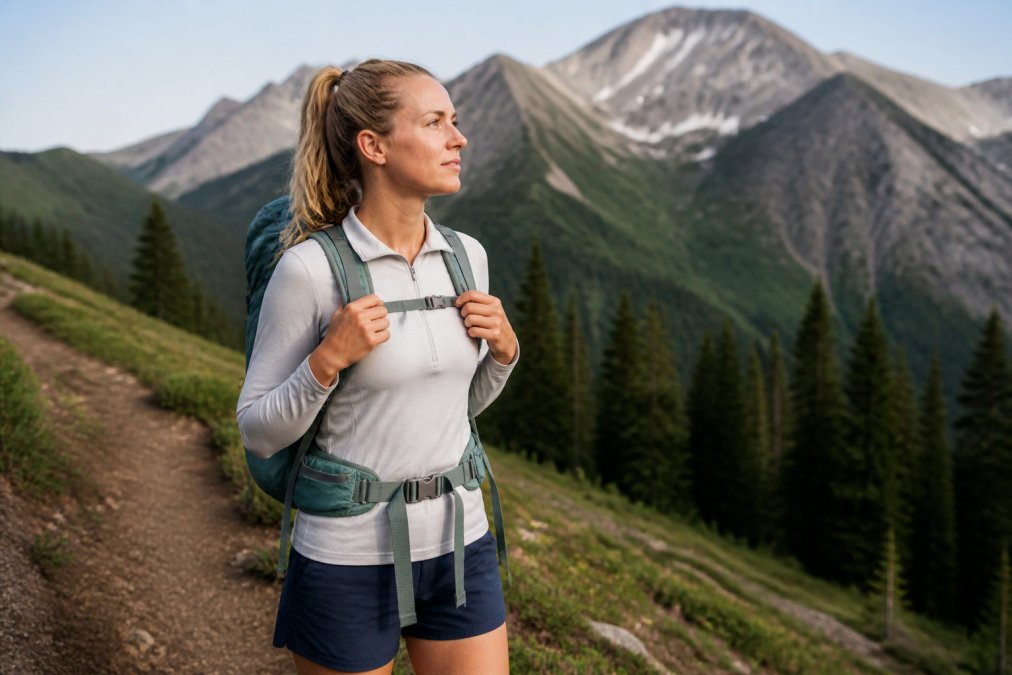
Women's packs typically range from 40 to 55 liters for weekend trips. The critical measurement is torso length, the distance from your C7 vertebra (the prominent bone at the base of your neck) to your iliac crest (hip bone). Most women fall between 16 and 18 inches. Men's packs often start at 19-20 inches, which creates pressure points and uneven load distribution.
A properly fitted pack transfers 70-80% of the weight to your hips. Your shoulders carry the rest. If the pack's torso length is too long, the hip belt sits too low, and your shoulders bear excessive load.
Ultralight backpacking gear for women includes packs designed specifically for female frames. These typically feature narrower shoulder straps, shorter torso lengths, and hip belts shaped to your anatomy. The weight savings, often 8-12 ounces compared to unisex packs, adds up quickly.
Hip Belt Load Distribution
The hip belt is your pack's foundation. It should sit on your hip bones, not your waist. A well-designed belt transfers load efficiently and prevents shoulder strain on long days.
7-Color Rechargeable Camping Lantern →
Clothing and Layering Systems for Trail Performance
Your clothing system should weigh roughly 2-3 pounds total. The key is choosing pieces that work across temperature ranges without overstuffing your pack.
Moisture-Wicking Base Layers
Merino wool and synthetic materials both work well for base layers. Merino is naturally antimicrobial, so you can wear it longer between washes. Synthetic dries faster and costs less. Ultralight backpacking gear for women typically uses either merino or polyester blends, keeping base layers under 6 ounces.
Synthetic Insulation vs. Down Fill
Down insulation is lighter and more compressible. Synthetic insulation works better when wet. For ultralight backpacking gear for women, the choice depends on your climate.
Kitchen, Hydration, and Footwear Essentials
These categories offer surprising opportunities for weight reduction without sacrificing function.
Lightweight Cooking Gear and Hydration Bladders
A complete ultralight cooking system weighs 4-8 ounces: a small pot, spoon, and fuel canister. Many ultralight hikers use an alcohol stove instead of a canister stove, saving weight and complexity. Pair it with a lightweight pot and you've got a functional kitchen.
Trail Runners and Footwear Weight
Trail runners weigh 6-10 ounces per shoe, half what traditional hiking boots weigh. They offer surprising ankle support and traction on maintained trails. For ultralight backpacking gear for women, trail runners are increasingly the default choice.
How to Pack Light for Weekends: Base Weight Reduction
Base weight is everything you carry except food and water. Reducing base weight makes every single mile easier.
Multi-Use Items and Gram Counting
Gram counting, obsessively tracking every ounce, sounds extreme but reveals surprising opportunities. A 2-ounce item that does two jobs beats two 1-ounce items that do one job each.
Three-Season Gear Strategy
Three-season ultralight backpacking gear for women means leaving behind winter-specific items: heavy insulation, insulated pads, winter boots. Spring, summer, and fall conditions rarely require this weight.
How to Reduce Base Weight Backpacking: Women-Specific Strategies
Beyond generic weight reduction, women face specific challenges that require specific solutions.
Menstrual Hygiene and Pelvic Health on Long Trails
This is rarely discussed but critically important. Menstrual products add weight and bulk. Ultralight hikers have several options: lightweight tampons, menstrual cups (which are reusable and weigh almost nothing), or period underwear designed for outdoor use.
Budget-Friendly Ultralight DIY Gear Options
Not everyone can afford premium ultralight gear. DIY modifications and budget alternatives exist.
Lighting and Multi-Function Gear for Campsite Setup
Campsite lighting and setup gear often get overlooked in weight discussions, but they matter for safety and usability.
| Gear Category | Typical Weight | Key Consideration | Best For |
|---|---|---|---|
| Ultralight Tent | 1.5-2.5 lbs | Ventilation & packability | Solo or pair hiking |
| Sleep Bag (down) | 1.5-2 lbs | Fill power 800+ | Dry conditions |
| Sleep Pad | 10-16 oz | R-value 3-4 | Three-season use |
| Women's Pack | 2-2.5 lbs | Torso length fit | Weekend trips |
| Base Layer | 4-6 oz | Merino or synthetic | Moisture management |
| Insulating Layer | 8-14 oz | Down or synthetic | Temperature range |
| Trail Runners | 6-10 oz per pair | Ankle support | Maintained trails |
| Cooking System | 4-8 oz | Alcohol vs. canister | Lightweight meals |
Frequently Asked Questions
What is the base weight for ultralight backpacking?
Base weight is the total weight of your gear excluding consumables like food, water, and fuel. For ultralight backpacking, most hikers aim for 4.5 to 6.8 kilograms (10-15 pounds). Women often target the lower end due to smaller frame considerations and load distribution challenges. Achieving this requires careful selection of each item, prioritizing lightweight materials, and choosing multi-use gear that reduces redundancy.
How can women reduce base weight backpacking without sacrificing comfort?
Focus on three areas: sleep system optimization (choose down fill power ratings that match your climate), backpack fit (a properly fitted women's pack distributes weight through hips rather than shoulders), and strategic layering with moisture-wicking synthetic insulation. Avoid cutting items that provide safety or health, menstrual hygiene gear and emergency shelter are non-negotiable. Instead, consolidate by choosing multi-use items like a trekking pole that doubles as tent support.
How do I choose the right ultralight backpack for a woman's frame?
Select a pack with torso length matching your measurements (typically 38-43 centimetres for women) and a hip belt designed for wider female hips. Pack volume should suit your trip length: 30-40 litres for weekends, 40-50 litres for longer trips. Test the hip belt load distribution in-store if possible, it should sit comfortably on your hip bones without digging in. Look for packs with durable water repellent coating and lightweight denier fabrics to minimize weight.
Is ultralight gear less durable than traditional backpacking gear?
Not necessarily. Ultralight gear prioritizes weight-to-durability ratio rather than absolute durability. High-quality ultralight tents use ripstop nylon with durable water repellent coatings, and lightweight sleeping pads are engineered for puncture resistance. The trade-off is typically in comfort features (padding, pockets) rather than longevity. Trail-tested ultralight brands invest in material science to maintain durability while reducing grams, making them suitable for regular weekend backpacking trips.