
Table of Contents
- Why beginners skip expensive camping stoves
- Cheap camping stove options that actually work
- Single-burner camp stove models for budget campers
- Camping without a stove: fire and heat alternatives
- Campfire cooking equipment and improvised solutions
- Total cost comparison: stove vs fuel vs alternatives
- Common mistakes beginners make with budget stoves
- Frequently Asked Questions
Last Updated: October 18, 2026
Why beginners skip expensive camping stoves
Most beginners approach their first camping trip with the same assumption: you need to buy a dedicated camp stove, when camping stove alternatives often work better for occasional trips. It feels like the obvious gear investment. But the truth is simpler. Many weekend adventurers discover that expensive camping stoves sit unused because they're overengineered for what they actually need.
The real barrier isn't capability, it's commitment. A beginner doesn't know yet if they'll camp twice a year or twice a month. Sinking money into specialized equipment before that answer is clear feels risky. That's where camping stove alternatives come in. They let you test the waters without a major investment, and many of them outperform expensive gear in specific situations.
The gap between what beginners think they need and what they actually use is where smart choices happen. Understanding your camping style first, car camping versus backpacking, weekend trips versus week-long adventures, determines whether you need a dedicated burner at all.
Cheap camping stove options that actually work
Budget-friendly camp stoves deliver genuine cooking performance without the premium price tag. The key is matching the right stove to your actual use case rather than buying the most expensive option available.
Single-burner canister stoves represent the most affordable entry point. These lightweight models use disposable fuel canisters and cost between $15-$30. They're stable enough for most pots and pans, heat water quickly, and pack down to the size of a water bottle. The trade-off is simple: you get one burner, not two, and the fuel canisters add ongoing costs.
Liquid fuel stoves offer better value over time if you camp frequently. They're cheaper to operate than canister fuel because bulk liquid fuel costs less per burn hour. Models start around $25-$40. They're also more reliable in cold weather and high altitude, where canister stoves struggle. The downside is complexity, priming and maintenance take more attention than canister stoves.
Solid fuel tablets and gel stoves are the true budget champions, often under $10. They're foolproof to use: light the tablet, place your pot on top, wait. No assembly, no fuel cartridges to buy. The drawback is heat output, they're slower for boiling water and can't simmer effectively. They work best for heating water for instant meals or hot drinks.
What separates a cheap stove that works from one that disappoints is stability and wind resistance. A wobbly burner spills your dinner. Look for models with wider leg spreads or those designed to accept larger cookware. Test reviews specifically mention whether the stove survived being bumped or used in light wind.
Single-burner camp stove models for budget campers
A single-burner camp stove covers 90% of what beginners actually cook outdoors: boiling water, heating soup, frying eggs, warming canned meals. The single-burner limitation is rarely a real problem because most camping meals don't require simultaneous cooking on multiple burners.
Canister stove models dominate the budget market because they're simple. You screw a fuel canister onto the burner head, ignite it, and cook. No moving parts to break. Brands offer dozens of variations, but the core design stays the same: lightweight, compact, and reliable. Expect to spend $20-$30 for a decent model with good reviews mentioning stability and wind performance.
The best budget canister stoves include a pot stand or wind shield. These small additions make a real difference. A pot stand keeps your cookware centered and stable. A wind shield reflects heat back toward your food and protects the flame from gusts. Some models integrate both into a single compact unit.
Liquid fuel stoves cost more upfront ($30-$50) but make sense if you camp monthly or more. The fuel is cheaper, the stove works in cold weather, and you can refuel from bulk containers instead of buying individual cartridges. The trade-off is learning curve. You'll need to prime the stove, adjust the fuel valve, and manage the flame. First-time users often overfill or underfill the fuel tank.
For absolute beginners, a canister stove with a wind shield is the easiest entry. You'll spend $25-$35, get reliable heat, and avoid the maintenance that liquid fuel demands. Once you know you'll camp regularly, upgrading to a liquid fuel model makes financial sense.
Camping without a stove: fire and heat alternatives
Cooking over a campfire is the oldest camping method, and it works. Many experienced campers prefer it because fire provides warmth, light, and a gathering point beyond just cooking.
Direct fire cooking uses simple equipment: a metal grill grate placed across rocks or a fire ring, or a tripod with a hanging pot. Grill grates cost $15-$30 and last for years. Hanging tripods run $20-$40. Both give you cooking surface without a stove.
The challenge with campfire cooking is heat control. An open flame produces inconsistent temperatures. You'll learn to move your cookware closer or farther from the flames to adjust heat. Some foods, like pancakes or eggs, require more finesse over fire than on a controlled burner. Soups, stews, and boiled water are forgiving because they tolerate temperature swings.
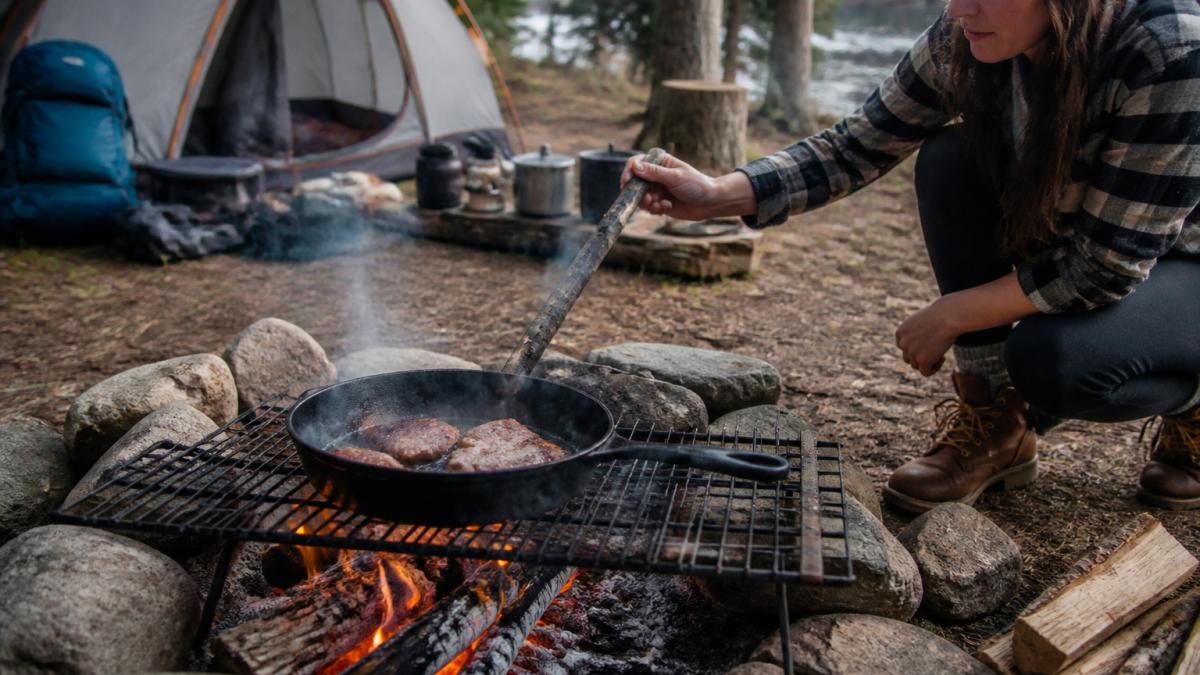
Safety matters with fire cooking. Keep cookware handles away from flames. Use long-handled utensils so your hands stay back from heat. Never leave food unattended over fire. Fires can flare unexpectedly, especially if fat drips into coals.
Some campgrounds restrict open fires or require fire pits. Check your destination's rules before committing to campfire cooking. Many sites allow it, but some don't. Having a backup plan, a cheap camp stove or solid fuel tablets, prevents disappointment.
Campfire cooking equipment and improvised solutions
Cast iron cookware is the workhorse of campfire cooking. A single 10-inch skillet costs $20-$40 and handles almost every meal: frying bacon, sautéing vegetables, baking biscuits in coals. Cast iron distributes heat evenly and lasts decades. The downside is weight, it's heavy for backpacking but perfect for car camping where weight doesn't matter.
Metal grill grates are the simplest campfire tool. Place one across your fire ring or rocks, set your pot on top, and cook. Grates cost $15-$30, pack flat, and require zero assembly. They work with any cookware you already own. The trade-off is stability, you're balancing cookware on a metal grid over flames, so balance and caution matter.
Hanging tripods let you suspend pots over fire. A basic tripod costs $20-$40 and adjusts up and down to control heat. This setup is more stable than grill grates and gives better heat control because you can move the pot away from flames quickly. Tripods work especially well for soups and stews that need steady heat.
Improvised solutions work surprisingly well. A metal coat hanger bent into a hook hangs a pot over flames. Rocks stacked around your fire create a makeshift oven for baking. A flat rock becomes a griddle for pancakes or eggs. These methods cost nothing if you're already at a campsite with available materials.
7-Color Rechargeable Camping Lantern →
The real advantage of campfire cooking is flexibility. You're not limited to one fuel type or burner capacity. Any pot works. Any fuel works. The learning curve is gentler than it seems, most people figure out heat management within a few cooking sessions.
Total cost comparison: stove vs fuel vs alternatives
Understanding total cost, not just upfront price, changes the decision. A cheap camp stove looks affordable until you factor in fuel cartridges for a full season.
A canister stove costs $20-$30 initially. Each fuel cartridge costs $3-$5 and lasts roughly 2-3 hours of cooking. If you camp 12 weekends per year and cook for 2 hours each weekend, you'll use 24 hours of fuel, roughly 8-12 cartridges annually.
A liquid fuel stove costs $35-$50 initially. Bulk liquid fuel costs roughly $0.50-$1.00 per hour of burn time, much cheaper than cartridges. The same 24 hours of annual cooking costs $12-$24 in fuel. Over three years, total cost is $59-$122.
Solid fuel tablets cost $0.50-$1.00 per tablet, and each tablet burns 5-15 minutes depending on the brand. For 24 hours of annual cooking, you'd need roughly 100-200 tablets, costing $50-$200 per year. Over three years, total cost is $150-$600.
Campfire cooking has zero ongoing fuel cost if you're already building a fire. Equipment (grill grate or tripod) costs $15-$40 one time. That's genuinely the cheapest option over years.
A grill grate at $25 plus cast iron cookware at $30 totals $55 upfront. You'll never buy fuel. Over three years, your total investment is just $55. Compare that to $90-$210 for a canister stove or $150-$600 for solid fuel tablets.
The math shifts if you backpack instead of car camp. Campfire cooking requires carrying cast iron or a grill grate, adding weight to your pack. A lightweight canister stove (8-10 ounces) becomes more attractive than a 2-pound cast iron skillet.
Common mistakes beginners make with budget stoves
The biggest mistake is buying based on price alone without considering fuel costs. A $15 stove that uses expensive cartridges becomes costly over a season.
Assuming one stove fits every trip is another common error. A lightweight canister stove works for backpacking but frustrates at car camping where weight doesn't matter and you want cooking flexibility.
Ignoring stability leads to spilled meals and frustration. A cheap stove with wobbly legs or a tiny pot stand tips easily. Read reviews that specifically mention stability and wind performance.
Underestimating fuel costs catches many beginners. They buy a cheap stove then realize cartridges add up. Plan your fuel budget before choosing a stove type.
Skipping wind protection is a mistake. Wind cools your food and wastes fuel. A basic wind shield costs $5-$10 and pays for itself in fuel savings.
Not testing your stove before a trip creates problems. Light it in your backyard first. Practice boiling water, frying food, and adjusting heat. Discover its quirks before you're hungry at a campsite.
Finally, many beginners buy too much gear too fast. Start with one simple setup. Use it for several trips. Learn what works and what frustrates you. Then upgrade based on real experience, not marketing.
| Setup Type | Initial Cost | Annual Fuel Cost | Best For | Total 3-Year Cost |
|---|---|---|---|---|
| Canister Stove | $25 | $30-$50 | Backpacking, simplicity | $115-$175 |
| Liquid Fuel Stove | $40 | $12-$24 | Frequent camping, cold weather | $76-$112 |
| Solid Fuel Tablets | $8 | $50-$200 | Emergency backup, minimal weight | $158-$608 |
| Campfire Cooking | $35 | $0 | Car camping, groups | $35 |
| Cast Iron + Grate | $50 | $0 | Car camping, durability | $50 |
Choosing a camping stove shouldn't require a large budget. The real choice is matching your camping style to the right tool. Car campers benefit from campfire cooking or a simple liquid fuel stove.
At ShopOutdoorsy, we stock reliable outdoor essentials that support your camping adventures without breaking your budget. Our 7-Color Rechargeable Camping Lantern ($19.83) pairs perfectly with any cooking setup, providing light for evening meals and camp activities.

Frequently Asked Questions
What can I use instead of an expensive camping stove?
Budget alternatives include portable butane stoves (often under $20), campfire grill grates, cast iron skillets over open flames, and solid fuel tablets. Many beginners start with a basic single-burner butane model or borrow a used stove before investing in premium gear. For car camping, a simple propane camp stove works well. For backpacking, solid fuel or wood-burning options cut weight and cost significantly.
Is a portable butane stove a good choice for beginner campers?
Yes, portable butane stoves are beginner-friendly and cost-effective. They're lightweight, easy to set up, and fuel canisters are widely available. However, butane performs poorly in cold weather below 5°C, so they're best for spring through autumn camping. They also lack wind resistance, so you'll need a windscreen. For car camping or mild-season trips, they're an excellent entry point before upgrading to more expensive options.
What is the cheapest way to cook food while camping?
Cooking over a campfire is free if firewood is available. A basic metal grill grate ($10-15) and cast iron skillet turn any fire into a cooktop. Solid fuel tablets cost $5-10 and require minimal equipment. If you want portability, a single-burner butane stove ($15-30) with fuel canisters ($1-3 each) is the cheapest portable option. For extended trips, calculate fuel costs: butane canisters last 1-2 hours of cooking, so budget accordingly.
Are budget camping stoves safe to use?
Budget stoves are safe when used correctly. Key rules: never use indoor-only stoves inside tents, always place stoves on stable, level ground away from flammable materials, and ensure proper ventilation outdoors. Butane and propane stoves produce carbon monoxide, so use only in open air. Inspect used stoves for damage before buying. Solid fuel tablets burn hot and take time to cool. Follow the manufacturer's instructions, and you'll avoid most safety issues.