
Table of Contents
- Do You Actually Need a Portable Water Filter for Weekend Trips?
- Water Filter vs Water Purifier for Camping: What's the Real Difference?
- The Actual Health Risks: When Untreated Water Gets Dangerous
- Portable Water Filter Types: What Each One Does (and Doesn't)
- How to Use a Portable Water Filter Correctly
- The Real Cost-Benefit: When a Filter Pays for Itself
- Weight vs. Safety: Finding Your Personal Balance
- Frequently Asked Questions
Last Updated: October 2, 2026
Do You Actually Need a Portable Water Filter for Weekend Trips?
Most weekend adventurers skip the water filter entirely. They pack a tent, grab snacks, and hope the stream near their campsite is clean enough to drink from. Then they get sick.
A portable water filter is worth it if you're drinking from untreated sources. The question isn't whether filters work, they do. The real question is whether the hassle and cost make sense for your specific trips.
This guide covers health risks, filter types, correct usage, and cost-benefit analysis for weekend trips, helping you decide when a portable water filter genuinely protects you.
Water Filter vs Water Purifier for Camping: What's the Real Difference?
A water filter removes bacteria and protozoa using physical barriers like activated carbon or hollow fiber membranes. A water purifier does that AND removes viruses using additional methods like UV sterilization or chemical treatment.
For most North American weekend trips, a filter is sufficient; viruses are rare in backcountry sources, but bacteria and protozoa like giardia and cryptosporidium are common threats.
Why This Matters for Weekend Trips
Purifiers are heavier, costlier, and slower, unnecessary for most North American weekend trips where bacteria and protozoa are the main risks. A filter solves the problem for 90% of casual trips.
The Actual Health Risks: When Untreated Water Gets Dangerous
Giardia causes severe diarrhea, cramping, and nausea lasting weeks; cryptosporidium can persist for months. Both spread through animal waste in streams and lakes.
Bacterial contamination from E. coli also occurs near wildlife or downstream from populated areas, causing gastrointestinal distress that can linger for weeks.
Risk varies by location: alpine snowmelt streams are safer than lowland creeks near trails. Since pathogens and upstream animal activity are invisible, that uncertainty makes filtration valuable.
Boiling is most reliable but requires fuel and time; a portable water filter trades some effectiveness for convenience.
Portable Water Filter Types: What Each One Does (and Doesn't)
Different filters use different technology. Understanding what each one removes helps you choose the right tool for your trips.
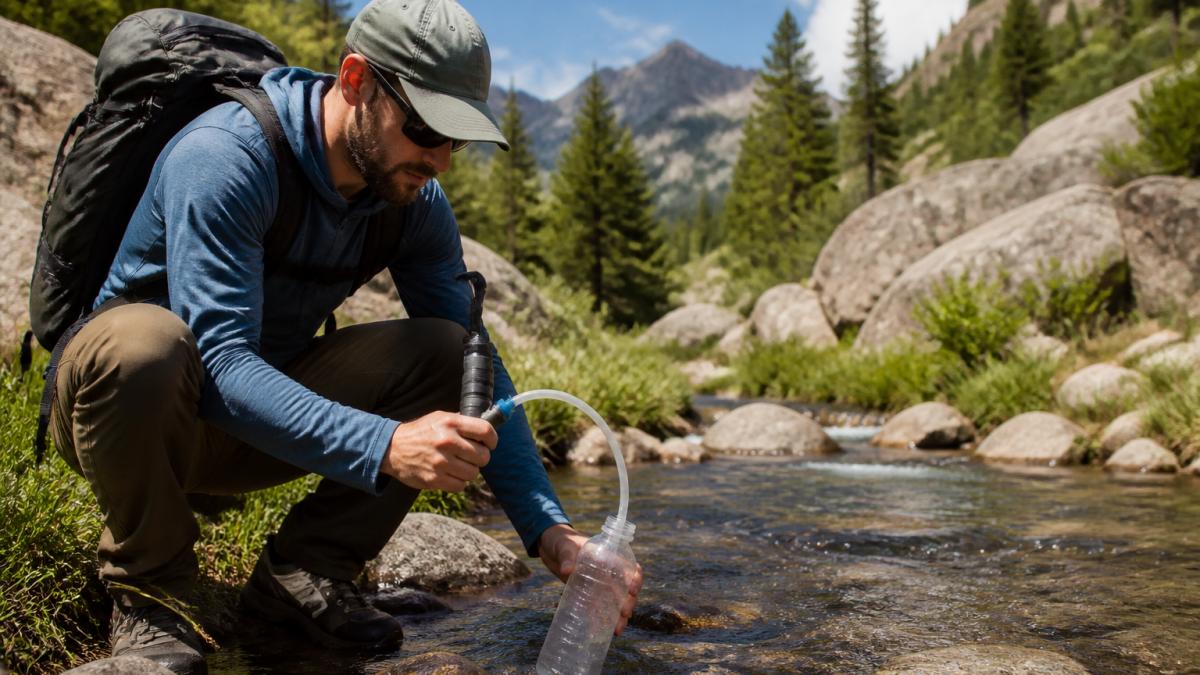
Squeeze filters (like LifeStraw and Sawyer) force water through hollow fiber membranes, removing bacteria and protozoa but not viruses. They're lightweight and affordable but slow water flow and can clog with sediment.
Pump filters use a hand pump for faster flow and handle turbid water better, but they're heavier and more complex, weight matters on weekend trips.
Gravity filters (like Platypus GravityWorks) filter large quantities without effort but require setup time, are bulky, and are overkill for solo weekend trips.
Straw filters (like LifeStraw) are ultralight and require no cleanup but only work for direct drinking and don't allow water storage.
UV sterilization (like SteriPen) kills bacteria, protozoa, and viruses but requires batteries, works poorly in turbid water, and provides no residual protection.
Chemical treatment (iodine or chlorine dioxide) is lightweight and inexpensive but doesn't remove sediment and may leave an unpleasant aftertaste.
How to Use a Portable Water Filter Correctly
Improper use defeats the purpose of carrying a filter. Here's what actually matters, both in the field and when you're storing the gear between trips.
Choose your water source carefully. Upstream and flowing water are safer than downstream or stagnant sources. Avoid visible animal activity or decomposing matter. Clear water filters better than turbid water, which clogs filters.
Pre-filter if necessary. Run cloudy water through a cloth first to extend filter life and improve flow rate.
Follow the manufacturer's flow rate. Slow, steady flow removes more contaminants than fast flow; rushing water reduces contact time with filter media.
Backflush regularly. Many filters can be reversed to dislodge trapped sediment, restoring flow and extending life. Check your filter's manual, squeeze and pump filters often support backflushing, but straw filters typically don't.
7-Color Rechargeable Camping Lantern →
Dry your filter completely before storage. This is the step most weekend hikers skip, and it's where filters fail between trips. Wet filters stored in sealed bags or backpacks create an ideal environment for mold and biofilm growth.
Store filters in a cool, dry place. Don't leave filters in a damp tent bag or car trunk over winter. Mold can colonize the filter media even when it's dry if humidity is high.
Check shelf-life and replace cartridges as needed. Hollow fiber membranes degrade over time, even when unused. Most squeeze filter cartridges remain effective for 2-3 years if stored properly, but check your manufacturer's guidance.
Don't rely on a single filter for your entire trip. Filters have a lifespan measured in gallons. A squeeze filter might last 1,000 gallons before the micron rating degrades. For a weekend trip, you'll use far less, but know your filter's limits.
Inspect filters before each trip. Before heading out, visually check your filter for cracks, discoloration, or signs of mold. If you notice anything unusual, replace the cartridge.
The Real Cost-Benefit: When a Filter Pays for Itself
A portable water filter costs between $20 and $60 for most weekend-trip options. A gravity filter runs higher, but that's overkill for short trips. The real cost-benefit depends on three factors: how often you drink untreated water, how much you value avoiding waterborne illness, and whether you should buy or rent.
The financial calculation. One bout of giardia can cost $200-$500 in medical care, antibiotics, and lost time off work. A $30 squeeze filter prevents that risk across dozens of trips.
But here's the angle most guides miss: rental and borrowing. Not every weekend hiker needs to own a filter. If you take one or two trips per year, borrowing a filter from a friend or renting one from an outdoor retailer costs less than buying.
The psychological benefit is real. Most weekend hikers don't get sick from untreated water, the actual risk is low in many North American backcountry areas. But the anxiety of drinking from an unknown source is high. Carrying a filter removes that anxiety. You can drink from a stream without worrying, which changes the experience.
The weight-to-benefit ratio for weekend trips. A squeeze filter weighs 3-4 ounces and costs $30. A straw filter weighs less than 2 ounces and costs $15. For a weekend trip, weight matters, every ounce adds up over a full day of hiking.
When to skip a filter. If you're bringing enough bottled water for your entire trip, a filter is unnecessary. If you're camping at a developed campground with potable water, a filter adds weight without benefit.
The honest take for weekend trips. A lightweight squeeze filter is the smart choice for most weekend trips. It weighs almost nothing, costs $30-$40, removes the pathogens you're most likely to encounter, and removes the anxiety of drinking from unknown sources. It's not perfect, but it's the best trade-off between weight, cost, safety, and peace of mind.
Weight vs. Safety: Finding Your Personal Balance
This is where gear decisions get personal. A squeeze filter weighs 3-4 ounces and costs $30. A straw filter weighs less than 2 ounces and costs $15. A gravity filter weighs 10+ ounces and costs $80.
For a weekend trip, weight matters. Every ounce adds up over a full day of hiking. If you're already carrying a tent, sleeping bag, and food, adding a pound for filtration changes the experience.
The safety benefit is real but not absolute. A filter removes bacteria and protozoa, but it doesn't guarantee you won't get sick. Contamination can happen during storage or handling. The filter only works if you use it correctly and consistently.
Here's the honest take: a lightweight squeeze filter is the smart choice for most weekend trips. It weighs almost nothing, costs $30-40, and removes the pathogens you're most likely to encounter. It's not perfect, but it's the best trade-off between weight, cost, and safety.
If you're doing a solo overnight trip and want to minimize weight, a straw filter is defensible. If you're camping with a group and can share the weight, a gravity filter becomes reasonable. If you're in a region with known viral contamination, a UV sterilizer or chemical treatment becomes necessary.
The key is matching your filter to your actual risk and your actual trip. Overthinking it leads to carrying gear you don't use. Underthinking it leads to preventable illness.
Waterborne illness can ruin a weekend trip and linger for weeks afterward. A portable water filter removes that risk without adding significant weight or complexity to your pack. At ShopOutdoorsy, we stock reliable filtration options designed for weekend adventurers. The right filter depends on your trip duration, water source risk, and how much weight you're willing to carry. Start with a quality squeeze filter, learn how to use it correctly, and you'll have peace of mind on every trip.
Frequently Asked Questions
Do portable water filters really work against bacteria and parasites?
Yes, but only if you choose the right type. Squeeze filters and pump filters with micron ratings of 0.1 to 0.3 microns block most bacteria and protozoa like giardia and cryptosporidium. However, they don't remove viruses or chemical contaminants. For weekend trips in North America, filtering bacteria and protozoa covers most waterborne illness risks. Always check the micron rating on your portable water filter before buying.
What is the best portable water filter for weekend camping trips?
The best choice depends on your trip type. For most weekend hikers, a filter that balances weight, speed, and cost is ideal. Test it at home first to understand flow rate and how much effort filtration requires.
How often do I need to maintain or replace a portable water filter?
Most squeeze and pump filters last 1,000 to 2,000 litres before needing replacement. For weekend trips, that's typically 2 to 5 years of use. Between trips, rinse the filter with clean water and allow it to dry completely to prevent mould. Some filters require backflushing to extend life. Store filters in a cool, dry place. Check the manufacturer's instructions for your specific model, as maintenance varies.
Is a portable water filter necessary if I'm only going on weekend trips near populated areas?
Not always. If your water source is a developed campground with treated tap water, you don't need filtration. If you're using streams or lakes near hiking trails, risk depends on upstream activity and turbidity. Even popular trails can have giardia and cryptosporidium from wildlife. Many weekend hikers skip filters for short trips and accept the small risk, while others filter for peace of mind. The psychological benefit of knowing your water is safe often justifies the small weight penalty for weekend trips.